
Exciting new project is taking place for cancer survivors and their families in Ballinasloe, Co. Galway. Jacqueline Daly Director of East Galway & Midlands Cancer Support Centre envisioned how to further enhance survivor’s recovery in none other than building a gym on site to improve health and fitness easily and conveniently for all members.
This is a state of the arts project and the first of its kind in Ireland. The centre has licenced the ‘Murphy (METs) Prograemme’ which will allow classes to be thought by qualified personal. “I have worked towards this moment for many years; to finally teach others to teach my programme safely and effectively and it is my goal for the ‘Murphy (METs) Programme’ to expand to other centres across the country so that a greater number of cancer survivors can reap its benefits”.
 This week we met with the Minister of Health ‘Leo Varadkar’ and discussed the plans for the centre. I had the opportunity to share with him a little about the ‘Murphy (METs) Programme’ and my goal to increase awareness to the health benefits associated with daily physical activity and draw attention to the amount and intensity of physical activity for cancer survivors to achieve these benefits; physiologic, metabolic and psychological.
I will keep you posted on our progress in Ballinasloe, Co Galway.

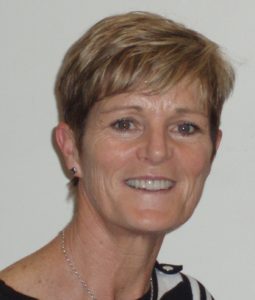 There is a growing body of literature that supports the importance of exercise in the prevention of cancer and cancer recurrence. Exercise helps increase lean body mass, reduces fat and decreases the likelihood of weight gain. To lose weight, activity and exercise must be increased. Bodies with more muscle mass require more energy expenditure than bodies with more fat, thus the more muscle you develop, the greater the amount of calories you burn. Any increase in activity and exercise is likely to have benefits and each person must increase their activity at a level that is appropriate for them. If you have been inactive, it may be important to check with your doctor about limitations, and then begin an exercise routine that starts slowly and increases in intensity and duration over a period of time. If you start too hard or too fast, you may injure yourself and stop exercising. Exercise really needs to be viewed as a lifetime process that has physiological and psychological benefits.
 These types of exercises would include brisk walking (about 3-4 miles in an hour). Walking is an excellent exercise; however, it is important to do enough of it to increase the number of METs. While the American College of Sports Medicine (ACSM) has determined that people need 4-6 METs five days per week, some exercise research suggests that you need more and it is recommended that people strive for 15-20 METs per week. To figure out how many METs you are using and how to increase it, consider the following;
 Anyone who has an interest in playing sports or keeping fit should understand the effects alcohol can have on their performance. Not having a balanced approach to alcohol could be what gets in the way of you reaping the rewards from all the work you’ve put in.


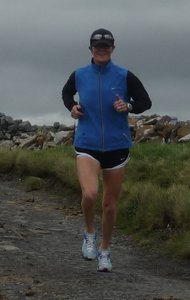 first and foremost! If time is limited for exercising make cardiovascular exercise your first choice by using the largest muscle groups in a repetitive movement (example; walking, jogging, swimming etc.).
 When it comes to
 Stair climbing is also excellent for increasing your bone strength (bone density) in your hips; it works on the main muscles for walking and is very good for your overall health. While watching your favourite TV programme or listening to your favourite radio programme marching on the spot or any form of dancing are additional choices.
 When athletes complete a marathon distance usually their thoughts are not focused on the importance of recovery; making the right choices in post-training and nutrition. Crossing the finishing line participants are mainly excited and relieved that they have finished.
 The following 5 tips can help lower risk of impairments:
 Focus on what makes you feel calm and in control. Managing stress is about taking charge of our thoughts, emotions, schedule, and the way we deal with problems. This isn’t as easy as it sounds. Identifying our true sources of stress, we have to look closely at our habits, attitude, and excuses.